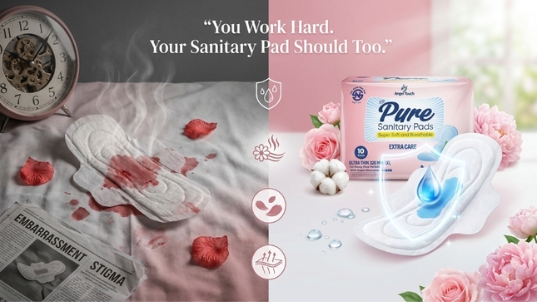
You wake up early. You go to school or work. You cook, study, exercise and take care of everyone around you. You work hard every single day. So why should your period slow you down? The answer is simple: it should not. But for many women and girls, it does. Leaking pads, bad smells, rashes and discomfort make period days some of the most stressful days of the month. Here is the truth: the problem is usually not your body. The problem is your sanitary pad.
What Does It Mean for a Pad to Work Hard?
When we say a sanitary pad should work hard, we mean it should do its job completely not just halfway. A hardworking pad does all of these things at the same time:
- Absorbs your blood quickly so you stay dry
- Holds the blood inside without leaking
- Stays in the right position even when you walk, run, sit or sleep
- Keeps your skin soft and rash-free
- Stays odour-free and fresh for the full time you wear it
- Does not make you feel bulky or uncomfortable
Most women have experienced a pad that failed at one or more of these things. Maybe it leaked on a heavy flow day. Maybe it shifted and bunched up. Maybe it caused a rash. Maybe it smelled bad even before it was full. When a pad fails you, it is not just uncomfortable it is stressful. You spend the whole day worrying and adjusting. You avoid wearing light-coloured clothes. You skip exercise. You feel less confident. That is not okay. And it does not have to be that way.
The 6 Things a Great Sanitary Pad Must Do
Let us break down each quality that separates a great pad from a bad one.
1. Fast Absorption
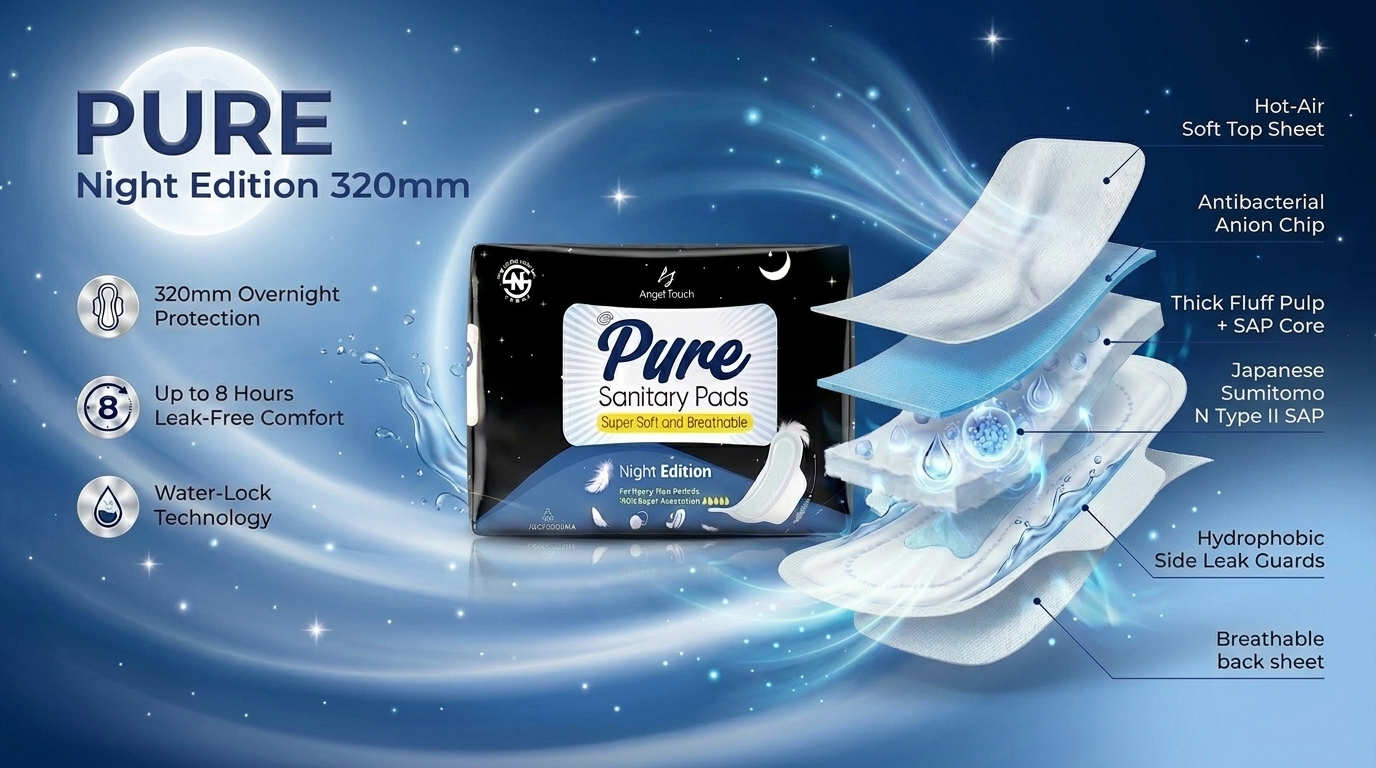
The top layer of a pad is the first thing that touches your skin. When blood comes out, this layer should pull it inward quickly in seconds, not minutes. If blood sits on the surface and spreads sideways, leaks happen. The best sanitary pads use a soft, quick-dry top layer that moves liquid downward immediately. This keeps your skin dry and prevents that wet, heavy feeling. If your pad still feels wet and uncomfortable hours after your last change, the top layer is doing a poor job.
2. High Absorbency Core
Beneath the top layer is the absorbent core the thick middle part of the pad. This is where blood is stored. A high-quality core can hold a large amount of fluid without leaking or breaking apart. On heavy flow days, a thin or low-quality core fills up quickly and starts to leak. A good absorbent core on a sanitary pad keeps absorbing even when it is almost full.
3. A Leak-Proof Bottom Layer
The bottom of a pad the part that faces your underwear should be completely waterproof. This is usually a thin film layer that stops blood from soaking through onto your clothes. If your pad ever leaks through to your underwear despite being worn correctly, the bottom layer is too thin or of poor quality.
4. Wings That Actually Work
Wings pads are pads that have side flaps also called wings that fold under and stick to your underwear. These are not just a bonus feature. On active days, wings are essential. Without wings, a pad can slide forward or backward every time you move. It can bunch up in the middle and leave the sides of your underwear unprotected. This is one of the most common reasons for side leaks. Good wings pads have sticky wings that stay attached all day they do not peel off from sweat, movement, or heat.
5. A Comfortable, Skin-Safe Surface
You wear a pad for hours at a time, right against your most sensitive skin. If the pad contains harsh chemicals, synthetic materials, or strong fragrances, you will likely experience redness, itching, or rashes especially in Nepal's hot and humid weather. The best sanitary pads use soft, natural or cotton-feel surfaces that are gentle on your skin. Pure sanitary pads by Angel Touch Hygiene Nepal are made with a soft surface that is kind to the skin and tested for safety.
6. The Right Shape and Size for Your Body
Not all women have the same body shape. Not all periods are the same flow. A great pad comes in different lengths and widths so you can find the one that fits your body perfectly. A pad that is too short leaves gaps. A pad that is too narrow does not cover enough area. A pad that is too wide causes rubbing and discomfort.
Why Does My Period Pad Smell Like Ammonia?
This is one of the most commonly searched questions about sanitary pads and one of the most embarrassing. Many women notice a strong smell coming from their pad after wearing it for a few hours. Sometimes it smells like ammonia sharp, chemical, almost like cleaning products. Here is what causes it, explained simply.
The Science Behind Pad Odour
Period blood itself does not actually smell very strong when it first comes out of your body. The smell develops when blood sits on the pad and is exposed to air and bacteria. Your vaginal area naturally has bacteria living on it these bacteria are healthy and normal. But when blood mixes with these bacteria and is exposed to warmth and air on your pad, chemical reactions happen. One of those reactions produces ammonia-like compounds. This is why your period pad smells like ammonia it is not a sign that something is wrong with your body.
What Makes Ammonia Smell Worse?
- Wearing a pad too long. The longer blood sits on a pad, the stronger the smell gets.
- Hot and humid weather. Heat speeds up bacterial activity. This is especially relevant in Nepal's summer and monsoon season.
- Low-quality pads. Cheap pads often use synthetic materials that trap heat and moisture.
- Dehydration. When you do not drink enough water, body odour becomes stronger overall.
- Diet. Foods like garlic, onion, and asparagus can affect body odour during your period.
How to Prevent Ammonia Smell from Your Pad
- Change your sanitary pad every 4 to 6 hours, even if it does not feel full
- Wash your intimate area with warm water at every pad change
- Choose pads made with breathable, natural materials
- Stay hydrated drink at least 8 glasses of water daily
- Avoid scented pads artificial fragrance mixes with natural smells and often makes it worse
- Choose a brand like Pure that uses skin-friendly materials that do not trap excessive heat
Why Does My Period Blood Smell Like Bleach?
Another question many women ask quietly is: why does my period blood smell like bleach? This smell is different from the ammonia smell. A bleach-like or chlorine-like smell can have a few different causes.
Cause 1: The Pad Itself
Many mass-produced sanitary pads are bleached with chlorine during manufacturing to make them look white and clean. This bleaching process leaves behind trace chemical compounds in the pad. When these compounds mix with your blood and body heat, they can produce a bleach-like smell. This is one of the most common but least talked-about reasons for that bleach smell it is not coming from your body, it is coming from the pad. Pure sanitary pads by Angel Touch Hygiene Nepal use a safe manufacturing process designed to minimise chemical residues.
Cause 2: pH Changes in Your Body
Your vagina has a natural pH level a measure of how acidic or alkaline it is. During your period, the pH changes because blood has a higher pH than the normal vaginal environment. This pH shift can make discharge and blood smell slightly different than usual sometimes described as metallic or faintly like bleach. This is completely normal and not a sign of infection.
Cause 3: Bacterial Vaginosis (BV)
In some cases, a strong bleach or fishy smell during your period can be a sign of Bacterial Vaginosis (BV) a common condition where the balance of bacteria in the vagina is disrupted. BV is not dangerous, but it does need treatment. If the bleach or unusual smell is very strong, does not go away after your period ends, or is accompanied by unusual discharge, itching, or burning, see a doctor. BV is easy to treat with the right medication.
Cause 4: Chlorine in Water
If you use chlorinated tap water to wash your intimate area, the combination of chlorine and period blood can sometimes produce a faint bleach-like smell. This is harmless.
The Hidden Dangers of Low-Quality Sanitary Pads
Bad smell is not the only problem with low-quality pads. Here are the hidden dangers that many women do not know about.
Harmful Chemicals
Some low-cost sanitary pads are made with materials that contain dioxins from chlorine bleaching, synthetic fragrances, and other chemicals. These come into direct contact with very sensitive skin for hours at a time. Over months and years, repeated exposure can cause skin irritation, hormonal disruption, and allergic reactions.
Rashes and Infections
A pad that does not allow air to circulate creates a warm, moist environment the perfect breeding ground for bacteria and fungi that cause rashes and yeast infections. Women who get frequent pad rashes should look closely at the quality of the pad they are using.
Micro-plastics
Many conventional sanitary pads contain plastic layers that do not break down. Not only is this bad for the environment, but plastics can also cause friction and irritation against delicate skin.
False Freshness from Synthetic Fragrance
Scented pads may smell nice in the packet, but they do not eliminate the natural smell of your period. Instead, artificial fragrance mixes with your body's natural odours and bacteria to create an even more unpleasant smell and increases the risk of allergic reactions.
What Makes Pure Sanitary Pads Different?
Pure sanitary pads by Angel Touch Hygiene Nepal are designed for the active Nepali woman. Here is what sets them apart:
| Feature | What It Means for You |
|---|---|
| Soft cottony surface | No rashes, no irritation gentle all day |
| High absorbency core | Stays dry even on heavy flow days |
| Wings pads design | Stays in place during work, school, and exercise |
| Extra-long Night Edition | Full back coverage while you sleep |
| Breathable back layer | Reduces heat and moisture, less bacterial growth |
| No harsh fragrances | Lower risk of skin irritation and chemical smell |
| Leak guard barriers | Side protection even on the heaviest days |
Pure pads are made to match your life whether you are in school, at the office, at the gym, or sleeping. They are built to work as hard as you do.
How to Get the Most Out of Your Sanitary Pad
Even the best pad in the world will not protect you if you do not use it correctly. Here are the key rules:
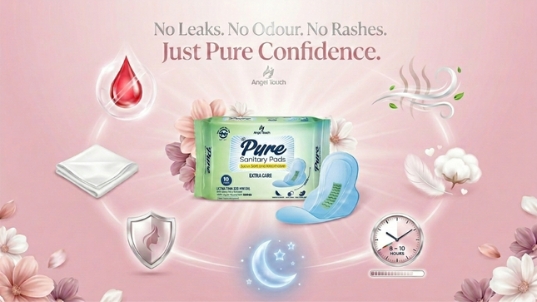
Change Every 4 to 6 Hours
This is the golden rule of sanitary pad use. Even if your pad does not feel full, change it every 4 to 6 hours. Old blood that sits on a pad too long causes smell, bacterial growth, and skin irritation. On heavy flow days usually day 2 and 3 you may need to change every 2 to 3 hours.
Apply the Pad Correctly
- Remove the wrapper and peel off the backing paper
- Press the pad firmly and flat in the centre of your underwear
- For wings pads, fold the wings down around the edges of your underwear and press firmly make sure they grip properly before you start moving around
- Check that the pad is centred properly before pulling up your underwear
Dispose of Pads Properly
Wrap used pads in their wrapper or toilet paper before throwing them in the bin. Never flush sanitary pads down the toilet they do not dissolve and will block the pipes. Proper disposal is especially important in Nepal where many areas have limited sanitation infrastructure.
Store Pads Correctly
Keep unused pads in a clean, dry place away from humidity and direct sunlight. Damp storage can cause the pad material to degrade and makes them less effective.
Choosing the Right Pad for Every Situation
One pad does not fit every situation. Here is a simple guide:
| Situation | Best Pad Choice |
|---|---|
| School or office medium flow | Ultra thin sanitary pad with wings |
| Sports or exercise day | Short, snug wings pad with good grip |
| Heavy flow day at home | Maxi or thick pad with leak guards |
| Sleeping on heavy flow nights | Extra-long overnight pad (Pure Night Edition) |
| Light spotting or last day | Panty liner |
| Sensitive skin | Organic or cotton-feel pad without fragrance |
Frequently Asked Questions About Sanitary Pads
Why does my period pad smell like ammonia?
Your period pad smells like ammonia because blood sitting on the pad mixes with natural bacteria and air, producing ammonia-like compounds. It is a chemical reaction not a sign that something is wrong with your body. Changing your sanitary pad every 4 to 6 hours and staying hydrated will reduce this smell significantly.
Why does my period blood smell like bleach?
Period blood can smell like bleach for two main reasons. First, many conventional sanitary pads are bleached with chlorine during manufacturing, leaving chemical traces that react with blood. Second, your vaginal pH changes during menstruation, which can produce a slightly bleach-like or metallic smell. Both are normal. If the smell is very strong or persistent after your period, see a doctor to rule out Bacterial Vaginosis.
Are scented sanitary pads better for odour?
No. Scented pads do not eliminate period smell they mix with it and often make it worse. They also contain artificial fragrances that can irritate sensitive skin and increase the risk of rashes. Always choose fragrance-free pads and manage odour through regular changing and good hygiene.
How often should I change my sanitary pad?
Change your sanitary pad every 4 to 6 hours during the day. On heavy flow days, change it every 2 to 3 hours. Always change right before bed and first thing in the morning. Never wear any pad for more than 8 hours.
What is the benefit of wings on a sanitary pad?
Wings pads keep the pad in place during movement. Without wings, the pad can slide forward or backward, leaving parts of your underwear unprotected and causing leaks. Wings are especially important for active women, on heavy flow days, and for overnight use.
Are Pure sanitary pads good for sensitive skin?
Yes. Pure sanitary pads by Angel Touch Hygiene Nepal are made with a soft surface that is gentle on sensitive skin. They are designed without harsh chemicals or strong synthetic fragrances, making them a suitable choice for women who experience rashes or irritation with other brands.